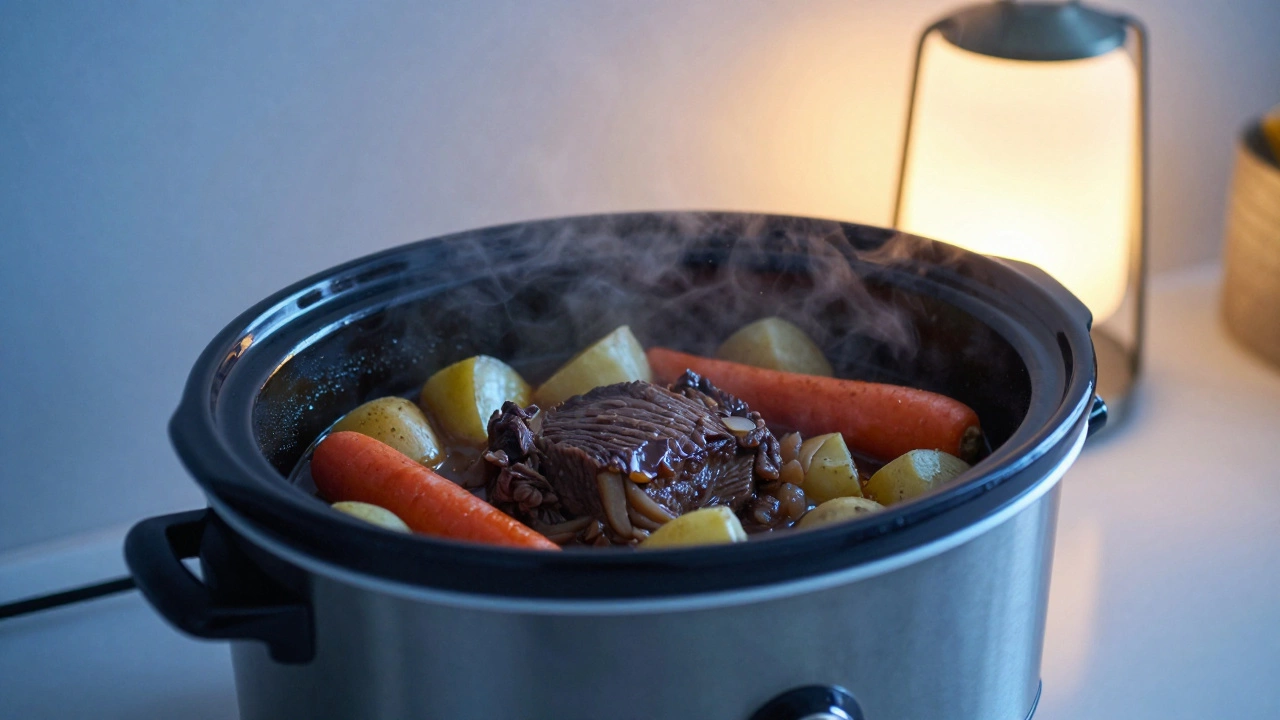
Slow Cooker Safety & Timing Estimator
Quick Guide to Low Setting Timing
If you're looking for a fast answer: most foods are safe and tasty on the low setting for 8 to 10 hours. Once you hit the 12-hour mark, you're entering a risky zone where texture degrades and food safety becomes a gamble. To keep it simple, follow these general rules of thumb:
- Vegetables and Small Cuts: 6 to 8 hours.
- Large Roasts and Tough Cuts: 8 to 10 hours.
- Whole Chickens or Large Stews: 8 to 10 hours.
The Science of the Danger Zone
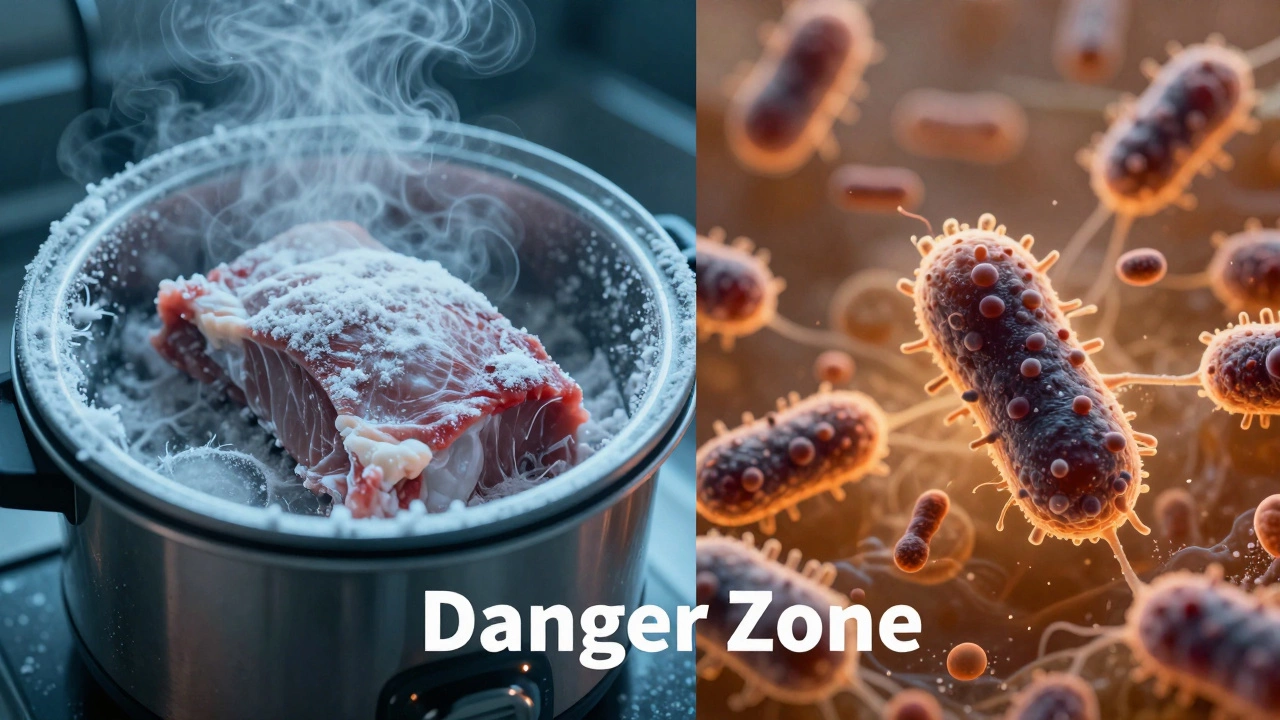
To understand why timing matters, we have to talk about the Danger Zone is the temperature range between 40°F and 140°F where bacteria grow most rapidly . When you use a Slow Cooker, which is an electric pot designed to simmer food at low temperatures over a long period, the goal is to move the food through this danger zone as quickly as possible.
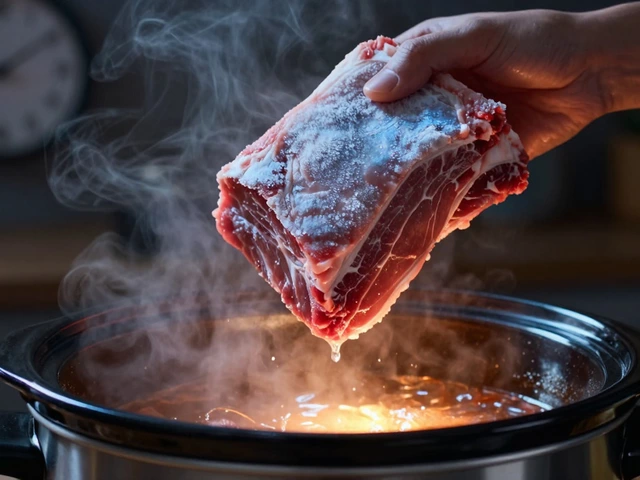
On the low setting, the heating element warms the ceramic pot slowly. If you put a huge piece of frozen meat in a slow cooker and set it for 10 hours, that meat might sit in the danger zone for four or five hours before it actually gets hot. That's where Salmonella or Staphylococcus aureus can throw a party. This is why you should always thaw your meat in the fridge before it hits the pot.
What Happens When You Overcook?
Beyond the safety risks, there's the issue of quality. Have you ever had a piece of pork that didn't just melt, but felt kind of mushy or "chalky"? That's the result of overcooking. When you leave a pot on low for too long, the connective tissues and proteins break down completely. Instead of a succulent roast, you get a texture that resembles baby food.
Vegetables are even more sensitive. Carrots and potatoes that are perfect at 7 hours usually turn into a flavorless mash by hour 11. If you're planning a long day, consider adding your root vegetables halfway through the process rather than at the start.
| Food Type | Ideal Time (Low) | Max Safe Limit | Risk of Overcooking |
|---|---|---|---|
| Chicken Breasts | 6-8 Hours | 10 Hours | High (Dry/Stringy) |
| Beef Chuck Roast | 8-10 Hours | 12 Hours | Medium (Mushy) |
| Dry Beans (Soaked) | 8-10 Hours | 12 Hours | Low (Usually fine) |
| Pork Shoulder | 8-10 Hours | 12 Hours | Medium (Over-shredded) |
How to Tell if it's Been on Too Long
If you forget your meal and find it's been cooking for 14 hours, don't just smell it. Bacteria that cause food poisoning often don't change the smell or taste of the food. Instead, look for these signs:
- Liquid Level: If the sauce has reduced to a thick, salty sludge, it's been on too long.
- Texture: Give the meat a poke. If it disintegrates with zero resistance, it's overdone.
- Color: Vegetables that have turned a greyish-brown hue have lost their nutritional value and flavor.
The safest bet is to use a Meat Thermometer, which is a device used to measure the internal temperature of food to ensure it has reached a safe level. If the internal temperature is consistently above 145°F to 165°F (depending on the meat), the food is technically safe, but that doesn't mean it tastes good.
Tips for Long-Day Cooking
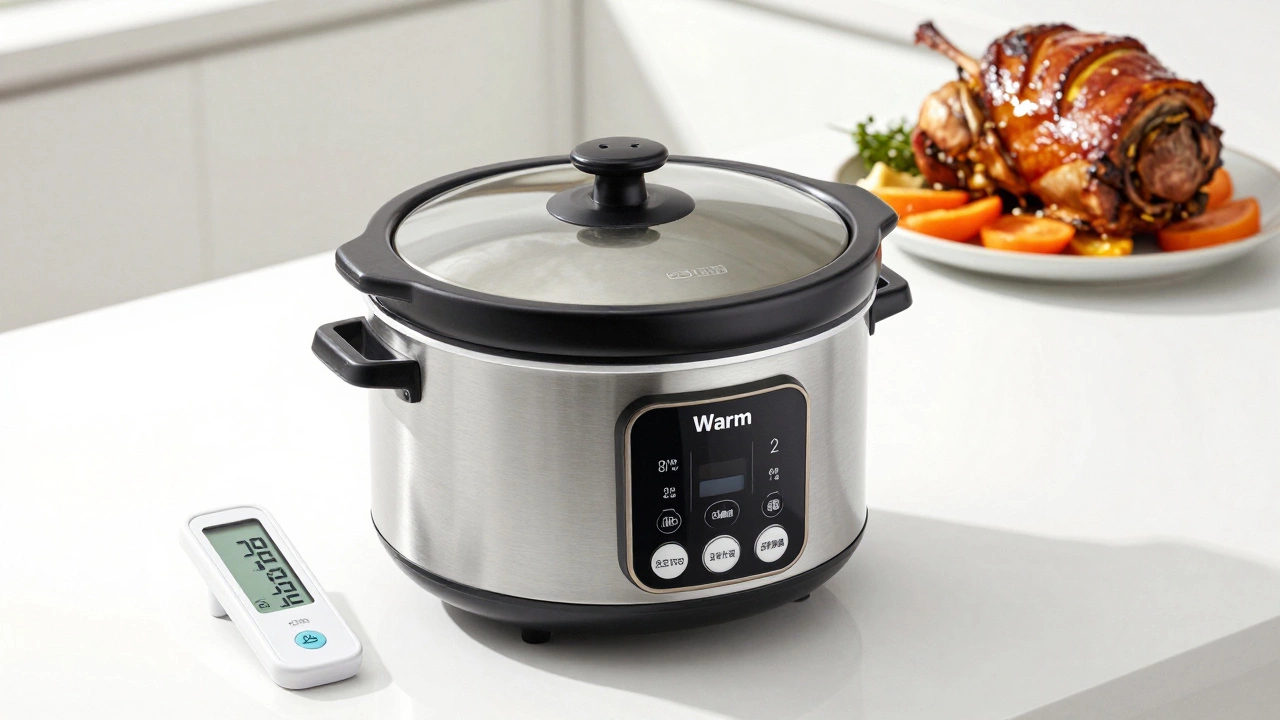
If you know you'll be gone for 10+ hours, you have a few options to ensure your meal stays delicious. First, look into a Programmable Slow Cooker. These allow you to set a timer so the machine switches from "Low" to "Warm" automatically once the time is up. The "Warm" setting isn't designed to cook food; it's designed to keep it out of the danger zone without further breaking down the fibers.
Another pro tip is to use the 25% rule. If a recipe says 4 hours on high, it's generally 8 hours on low. However, if you're pushing toward the 10-hour mark, you might want to cut your meat into larger chunks. A whole roast will hold up better over a long stretch than cubed stew meat, which will likely overcook.
Common Pitfalls to Avoid
Many people make the mistake of lifting the lid every hour to "check' on the food. Every time you open that lid, you let out a massive amount of heat and steam. This can add 15 to 30 minutes to your total cooking time and actually keeps the food in the danger zone longer. Resist the urge to peek!
Also, avoid overloading the pot. If you fill a Crock-Pot (a common brand of slow cooker) to the very brim, the heat won't distribute evenly. The edges might be boiling while the center remains lukewarm, significantly increasing the risk of foodborne illness.
Can I leave a slow cooker on low overnight?
Yes, provided the total time doesn't exceed 10-12 hours and the food started from a safe temperature (thawed). However, it's safer to use a programmable model that switches to a "Warm" setting after the cooking time is complete.
Is it safe to put frozen meat in a slow cooker on low?
It is generally discouraged. Frozen meat takes much longer to reach a safe temperature, meaning it spends more time in the "Danger Zone" where bacteria thrive. Always thaw meat in the refrigerator first.
What is the difference between the Low and High settings?
The Low setting heats the pot more slowly and is better for tough cuts of meat that need time to break down collagen. The High setting reaches the simmering point faster and is used for shorter cooking windows. Generally, Low takes about twice as long as High.
Can I leave food in the slow cooker on warm for a long time?
The "Warm" setting is meant for holding food, not cooking it. Most experts suggest keeping food on warm for no more than 2 to 4 hours. After that, the quality drops and the risk of bacterial growth increases if the temperature dips.
How do I know if my slow cooker is actually reaching the right temperature?
The best way is to use a digital meat thermometer. For most meats, you want to see an internal temperature of at least 145°F for fish/beef or 165°F for poultry to ensure all pathogens have been destroyed.
Next Steps for Your Dinner Plan
If you're worried about timing, start by auditing your hardware. If you have an old-school manual dial, consider upgrading to a digital model with a timer. If you're stuck with a manual one, plan your day around an 8-hour window. If you leave at 8 AM, aim to be home by 4 PM. If you're staying out later, switch your recipe to something more forgiving, like a hearty bean chili, which handles longer simmer times better than a delicate chicken breast.

Write a comment