Cooking Method Speed Estimator
Select a dish type below to see estimated cooking times for popular appliances. Find out what cooks faster than your Crockpot!
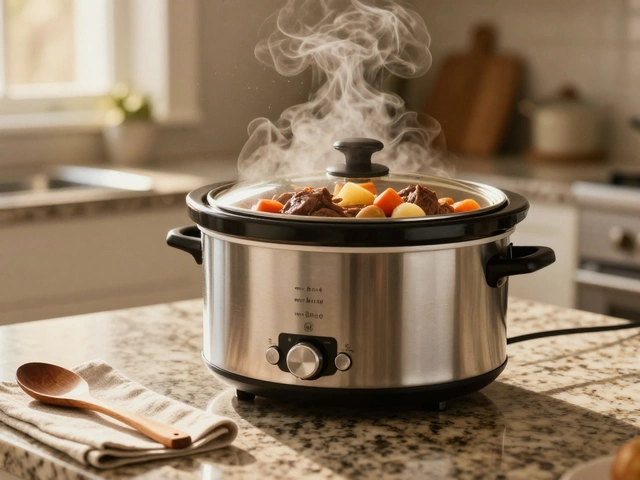
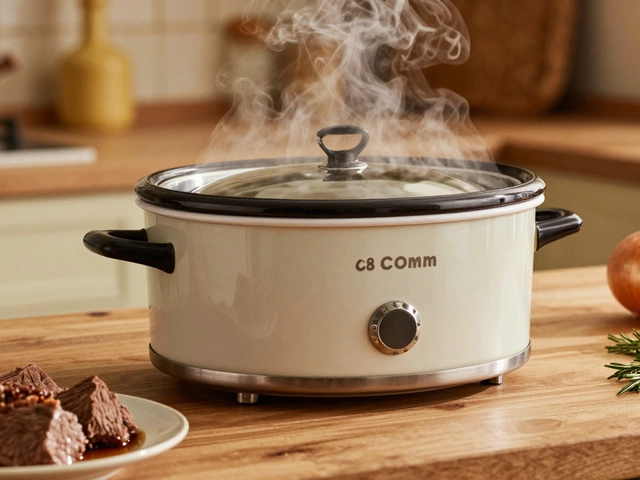
You’re standing in your kitchen at 5:30 PM. The family is hungry now. You stare at the Crockpot on the counter, knowing that while it’s great for Sunday prep, it won’t feed anyone by 6:00 PM. We’ve all been there. The slow cooker is a magical tool for hands-off convenience, but its biggest flaw is time. If you love the texture of braised meats or tender beans but hate waiting eight hours, you need to know what cooks faster than a Crockpot an electric countertop appliance used for simmering food at low temperatures over long periods.
The answer isn't just one gadget; it's a category of tools designed to manipulate heat and pressure. While a traditional oven takes an hour to preheat and another two to roast a chicken, other methods can cut that time by half-or more. Let’s break down the real contenders that beat the slow cooker in speed, without sacrificing the quality of your dinner.
The Pressure Cooker: The Speed King
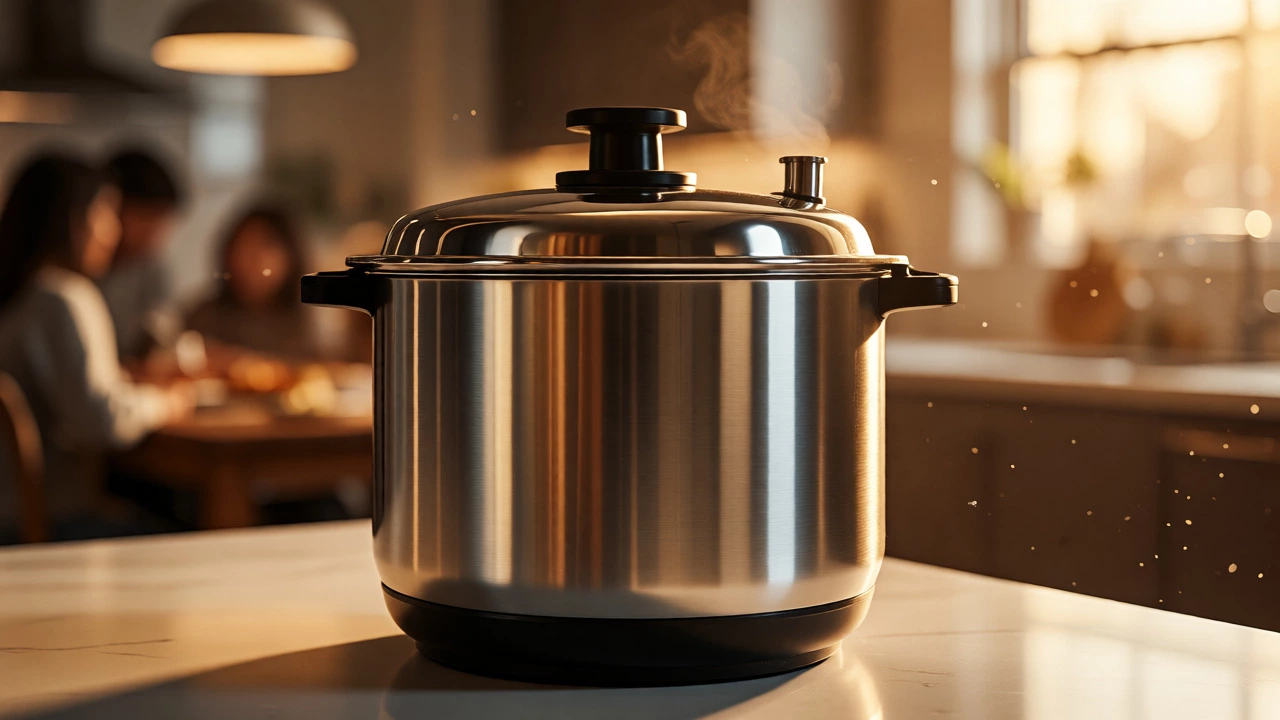
If you want the closest result to a slow-cooked meal but in a fraction of the time, look no further than the Pressure Cooker a sealed cooking vessel that uses steam pressure to raise the boiling point of water, allowing food to cook at higher temperatures. This is the heavy hitter in the race against time. By trapping steam, a pressure cooker raises the internal temperature above 212°F (100°C), often reaching 250°F (121°C). Higher heat means faster chemical reactions, which breaks down collagen in tough cuts of meat much quicker than simmering ever could.
Think about a beef chuck roast. In a Crockpot, you’re looking at 8-10 hours on Low. In a modern electric pressure cooker like an Instant Pot, you’re looking at 45-60 minutes under high pressure, plus natural release time. That’s a reduction from nearly half a day to less than two hours. It’s not magic; it’s physics. The liquid doesn’t evaporate, so flavors stay concentrated, and the fibers in vegetables and meats soften rapidly.
| Dish Type | Crockpot (Low) | Pressure Cooker (High) | Time Saved |
|---|---|---|---|
| Beef Stew | 8 hours | 35 minutes + 15 min release | ~7 hours |
| Chicken Thighs | 4 hours | 10 minutes + 5 min release | ~3.5 hours |
| Dried Beans (No Soak) | Not recommended | 25 minutes | N/A |
| Pot Roast | 8 hours | 45 minutes + 10 min release | ~6.5 hours |
The trade-off? You lose some of the "set it and forget it" vibe. Pressure cookers require attention. You have to monitor the timer, ensure the seal is correct, and manage the release valve. But if speed is your priority, nothing beats this method for soups, stews, grains, and legumes.
The Air Fryer: Crispy Speed Without the Oven
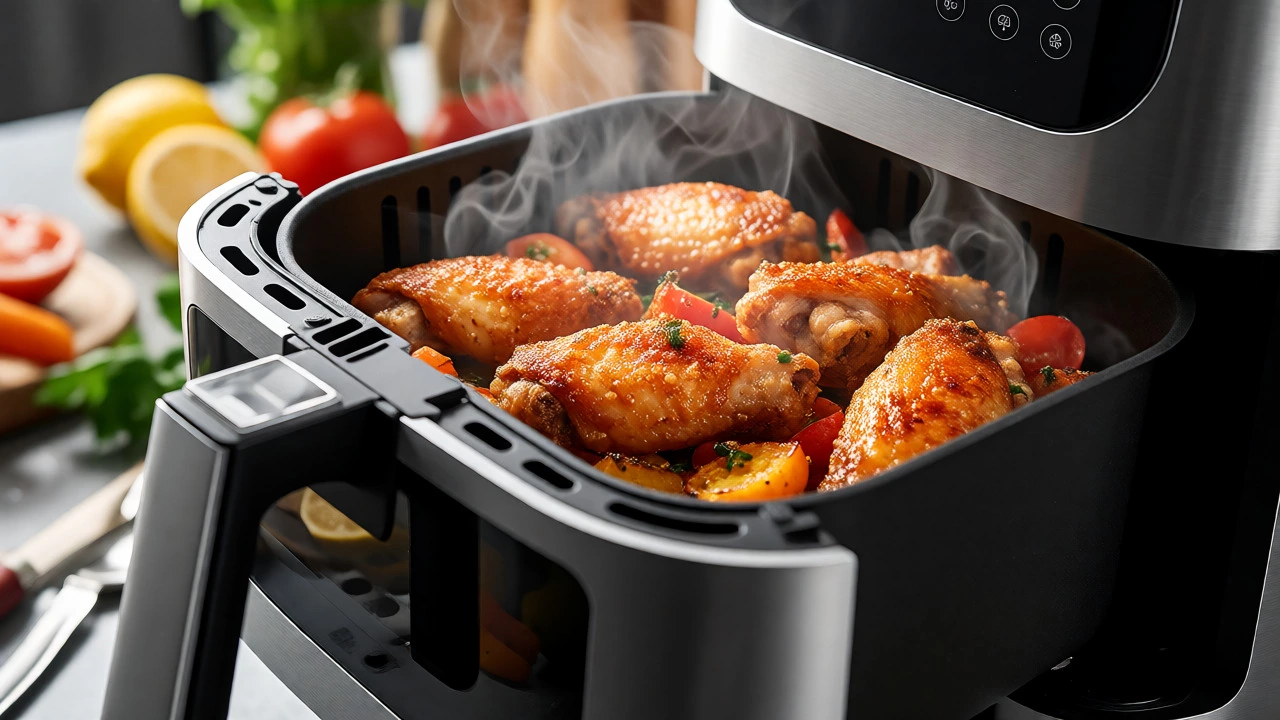
Maybe you don’t want a stew. Maybe you want roasted potatoes, crispy chicken wings, or baked salmon. For these dry-heat applications, the Air Fryer a convection toaster-style oven that circulates hot air around food to create a crispy layer with little to no oil is significantly faster than both a Crockpot and a conventional oven. An air fryer works by using a high-speed fan to blow extremely hot air around the food. Because the chamber is small, it preheats in minutes rather than the 15-20 minutes a standard oven needs.
Compare this to a Crockpot. A Crockpot cannot crisp food. It steams and simmers. If you throw chicken thighs into a Crockpot, they come out soft and pale. If you throw them into an air fryer, they come out golden brown and crunchy in 20-25 minutes. Yes, the texture is different-you aren’t getting that fall-apart tenderness of a braise-but you are getting a delicious, cooked meal in under half an hour. For weeknight dinners where you crave texture, the air fryer wins easily.
The Instant Pot: Hybrid Convenience
Most people today use the term "Instant Pot" interchangeably with pressure cooker, but it’s worth noting that these devices are multi-cookers. They combine the functions of a pressure cooker, a slow cooker, a rice cooker, and a sauté pan. Why does this matter for speed? Because you can skip steps.
In a traditional slow cooker recipe, you often have to brown your meat in a separate skillet before adding it to the pot. This adds cleanup and time. With an Instant Pot, you hit the "Sauté" button, brown the onions and garlic right in the inner pot, deglaze with broth, add the rest of the ingredients, and switch to "Pressure Cook." You’ve eliminated one piece of cookware and saved about 15-20 minutes of active cooking time compared to the traditional method. It’s not just about the pressure function; it’s about workflow efficiency.
The Microwave: Underrated for Basics
We tend to dismiss the microwave as a tool for reheating leftovers, but for specific tasks, it is unbeatable. Can you make a full dinner in a microwave? Sure, if you’re okay with steamed veggies and quick oats. But consider side dishes. Cooking dried lentils in a Crockpot takes hours. In a microwave, covered in water, they can be tender in 15-20 minutes. Baking a potato? A microwave does it in 5-8 minutes versus an hour in an oven.
The limitation here is capacity and texture. You can’t sear a steak in a microwave, and large batches take too long. However, for single servings or quick sides, it’s the fastest appliance in most kitchens. If you’re feeding one person, a mug cake made in the microwave is ready in 90 seconds. Try doing that in a Crockpot.
Stovetop Braising: The Traditional Fast Track
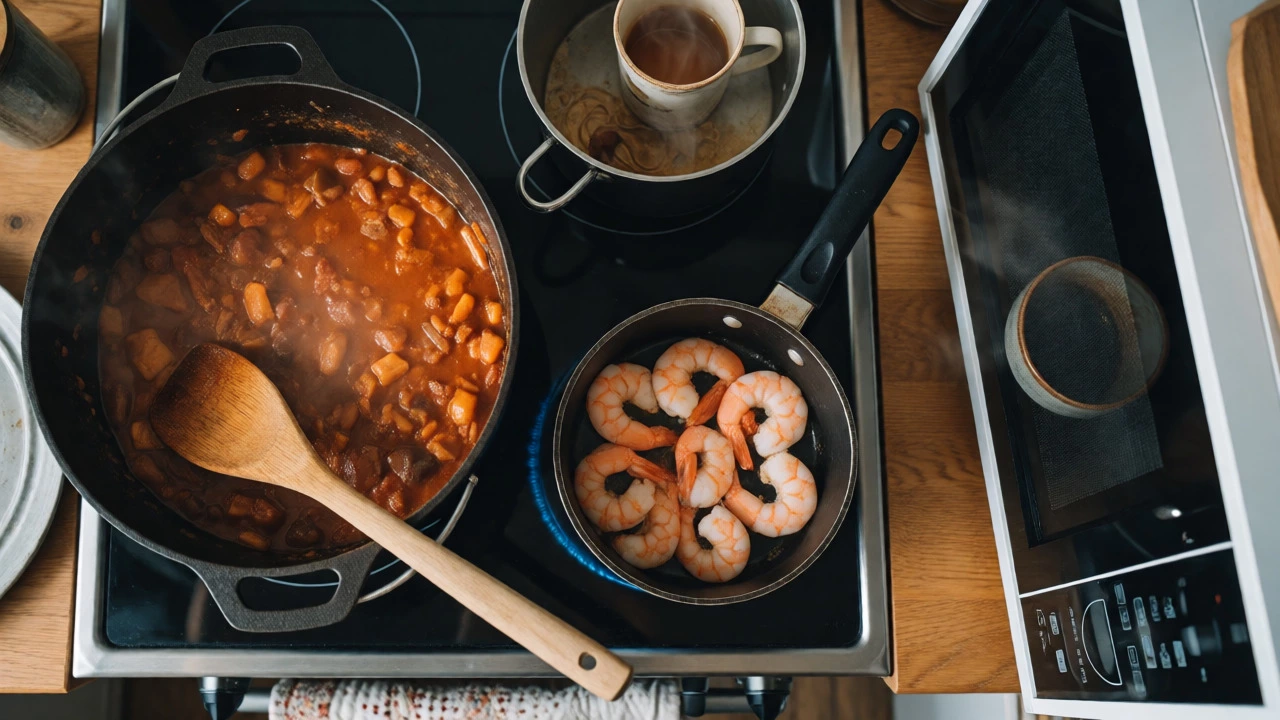
Before electric gadgets took over, we had pots and pans. A Dutch oven on the stovetop is remarkably efficient. While a Crockpot heats up slowly and maintains a low temperature, a stovetop burner delivers direct, intense heat. You can bring liquids to a boil in minutes, then reduce to a simmer. For smaller cuts of meat-like chicken breasts, fish fillets, or shrimp-stovetop cooking is vastly superior in speed.
A shrimp scampi made in a Crockpot would turn rubbery because shrimp only needs 3-5 minutes to cook. Leaving it in a warm pot for hours ruins it. On the stove, you have total control. You can finish a stir-fry in 10 minutes. You can poach eggs in 5. The stovetop lacks the automation of a Crockpot, but it offers the flexibility to stop cooking exactly when the food is done. For anything delicate, the Crockpot is actually slower because you have to wait for the entire volume of liquid to reach temperature, whereas a pan heats instantly.
Which Method Should You Choose?
Deciding what cooks faster depends entirely on what you are making. Here is a simple decision tree to help you pick the right tool:
- Making tough cuts of meat (brisket, pork shoulder)? Use a Pressure Cooker. It mimics the slow cooker results in 1/10th the time.
- Want crispy skin or roasted veggies? Use an Air Fryer. The Crockpot will make these soggy, and the oven is too slow.
- Cooking delicate proteins (shrimp, fish, chicken breast)? Use the Stovetop. These foods overcook quickly in a slow environment.
- Preparing grains or beans? Use a Rice Cooker or Pressure Cooker. Both are faster than boiling on the stove and infinitely faster than a Crockpot.
- Soups and stews with root vegetables? Pressure Cooker is best for speed; Stovetop is good if you want to taste-test along the way.
It’s also worth mentioning the Steamer a device that cooks food by exposing it to steam. Electric steamers can cook vegetables and dumplings in 10-15 minutes. They preserve nutrients better than boiling and are faster than roasting. If you’re trying to eat healthy and fast, a tiered steamer basket on the stove or an electric unit is a solid choice.
Tips for Speeding Up Your Current Slow Cooker
If you aren’t ready to buy new appliances, you can still make your Crockpot feel faster. First, use the "High" setting instead of "Low." High usually runs at 300°F and Low at 190°F. Most recipes can be converted by reducing the time by half. Second, start with hot liquid. Boiling your broth on the stove before pouring it into the pot saves 30-45 minutes of heating time. Third, chop vegetables smaller. Large chunks take longer to heat through. Uniform, small pieces cook evenly and quickly.
Finally, don’t open the lid. Every time you lift that ceramic top, you lose significant heat and moisture, resetting the clock. Patience is key, even when trying to hurry.
Frequently Asked Questions
Can I convert any slow cooker recipe to a pressure cooker recipe?
Mostly, yes. However, you must adjust the liquid amounts. Pressure cookers do not allow evaporation, so you need less liquid than a slow cooker. As a rule of thumb, reduce the liquid by 1/3 to 1/2. Also, delicate ingredients like dairy or pasta should be added after pressure cooking, as they can curdle or turn mushy under high heat.
Is an air fryer really faster than a slow cooker?
For foods that benefit from browning or crisping, absolutely. An air fryer can cook chicken wings in 25 minutes, whereas a slow cooker would take 4+ hours and produce soft, non-crispy wings. However, an air fryer cannot replicate the tender, falling-apart texture of a beef stew, so it’s not a direct substitute for all slow cooker functions.
Why is my pressure cooker taking so long to build pressure?
Several factors affect pressure buildup time: the amount of food, the starting temperature of the ingredients, and the size of the machine. Frozen foods take much longer to come to pressure than thawed ones. Also, if the sealing ring is worn out or dirty, steam escapes, preventing pressure from building. Check your gasket regularly.
Do microwaves destroy nutrients?
This is a common myth. Microwaving often preserves more nutrients than boiling because the cooking time is shorter and less water is used. Vitamins like C and B are sensitive to heat and leach into water. Since microwaves cook quickly with minimal water, they are actually one of the most nutrient-retentive cooking methods available.
Can I put frozen meat directly into a pressure cooker?
Yes, unlike a slow cooker where frozen meat can linger in the "danger zone" of bacteria growth for too long, a pressure cooker brings the temperature up quickly enough to be safe. Just expect to add 5-10 minutes to the cooking time compared to fresh meat.
Ultimately, the "best" appliance depends on your schedule and your menu. If you want set-and-forget comfort food, stick with the Crockpot. But if you’re tired of planning meals six hours in advance, investing in a pressure cooker or an air fryer might change how you view weeknight cooking. They offer speed without forcing you to resort to processed convenience foods.


Write a comment