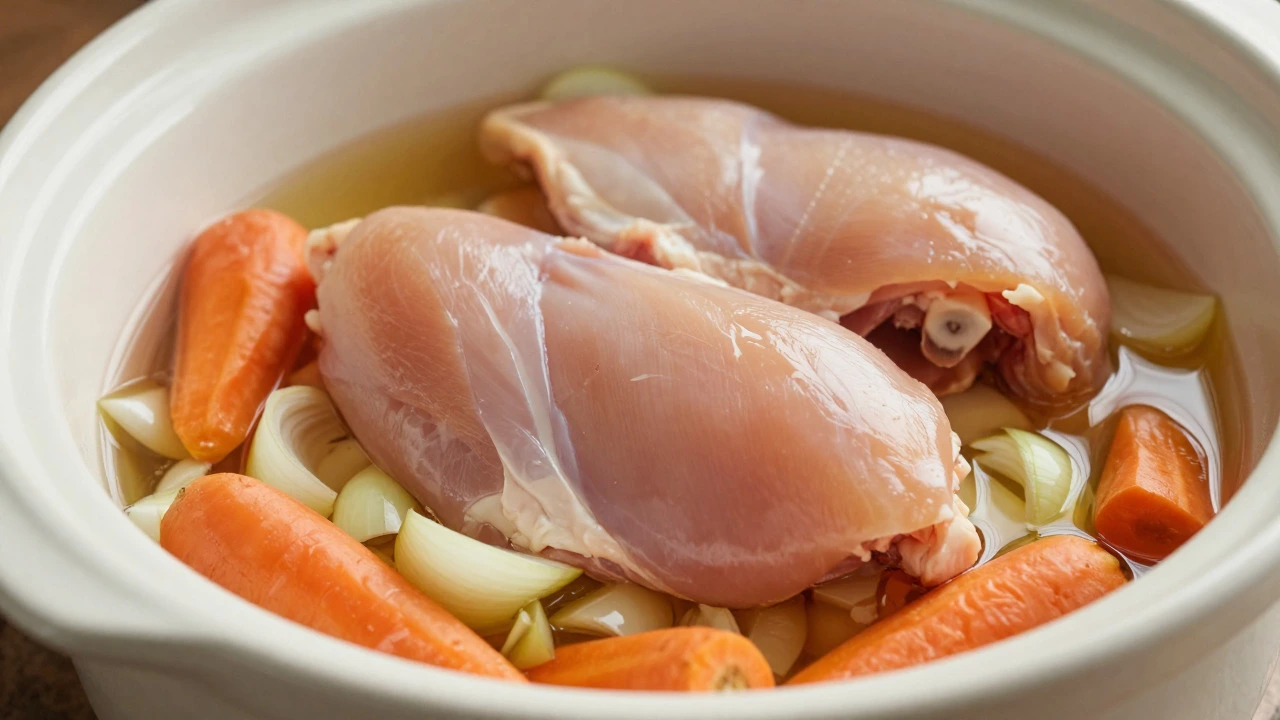
Slow Cooker Chicken Liquid Calculator
Recommended Settings
- Time 4-6 Hours (Low)
- Risk High (Dries out easily)
Have you ever stared into your slow cooker, wondering if that pile of chicken is going to turn into rubber because it’s not swimming in a lake of water? It’s a common panic. We’ve all been taught that "low and slow" means submerging everything. But here is the hard truth: if you completely cover your chicken in water, you are likely ruining it. You aren’t making tender meat; you’re making boiled, bland, gray sludge.
The short answer is no, the chicken does not have to be covered in water. In fact, it shouldn’t be. The goal of slow cooking isn’t boiling; it’s braising. There is a massive difference, and understanding that distinction will save your dinner from disaster. Let’s break down exactly how much liquid you need, why water is often the wrong choice, and how to keep that meat juicy without turning your kitchen into a soup factory.
Why Submerging Chicken Is a Mistake
Think about what happens when you boil an egg. The heat travels through the water directly to the food. Now think about a slow cooker. It’s an insulated pot with a lid. When you add liquid, it heats up, turns to steam, and circulates around the food. That steam is what cooks the chicken gently. If you fill the pot so the chicken is underwater, you lose that gentle steaming environment. Instead, you get a direct-boil effect.
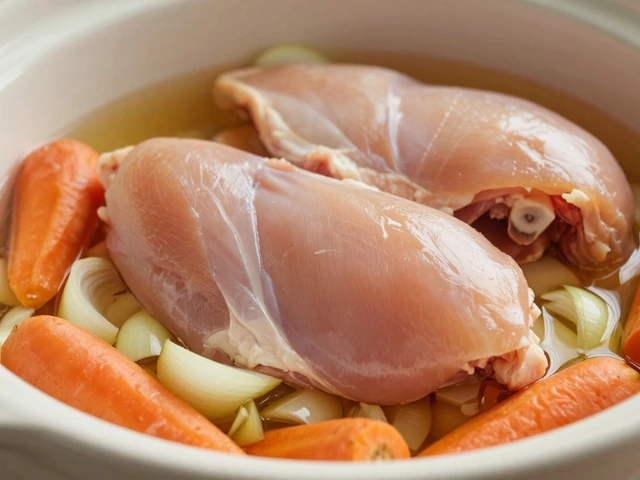
Chicken breast, in particular, is lean. It has very little fat to protect it from drying out. When you boil lean meat, the proteins tighten up aggressively, squeezing out every drop of moisture. The result? Dry, stringy texture. By keeping the chicken mostly above the liquid line, you allow the natural juices of the meat to stay inside while the surrounding steam keeps the surface moist. You want the chicken to sweat, not swim.
What happens if I put too much water in my slow cooker?
If you use too much water, the flavor becomes diluted and watery. The chicken ends up tasting like nothing because the natural juices and seasonings are washed away. Additionally, the texture can become mushy or rubbery depending on the cut of meat, as prolonged boiling breaks down fibers unevenly.
The Magic Ratio: How Much Liquid Do You Actually Need?
So, if you don’t cover it, how much do you add? The golden rule for slow cookers is usually between one cup and two cups of liquid total for a standard 6-quart pot. This creates enough steam to cook the food evenly without drowning it. For chicken specifically, you often need even less-sometimes just half a cup to one cup.
Here is a quick guide based on the size of your appliance:
- 3-Quart Slow Cooker: Use ½ to 1 cup of liquid.
- 5-Quart Slow Cooker: Use 1 to 1.5 cups of liquid.
- 7-Quart Slow Cooker: Use 1.5 to 2 cups of liquid.
This amount ensures that the bottom layer of ingredients (like onions or carrots) doesn’t burn, while the chicken sitting on top remains exposed to the humid air. If you are cooking a whole chicken or large bone-in thighs, they release their own juices as they cook. In those cases, you might only need a splash of liquid, or none at all, especially if you start with frozen chicken which releases significant water as it thaws and cooks.
Water vs. Better Alternatives
Even if you get the volume right, using plain tap water is a missed opportunity. Water adds moisture but zero flavor. Since slow cooking takes hours, any subtle flavors in the liquid get amplified. If that base note is flat water, your final dish will taste flat. Swap water for something that builds depth.
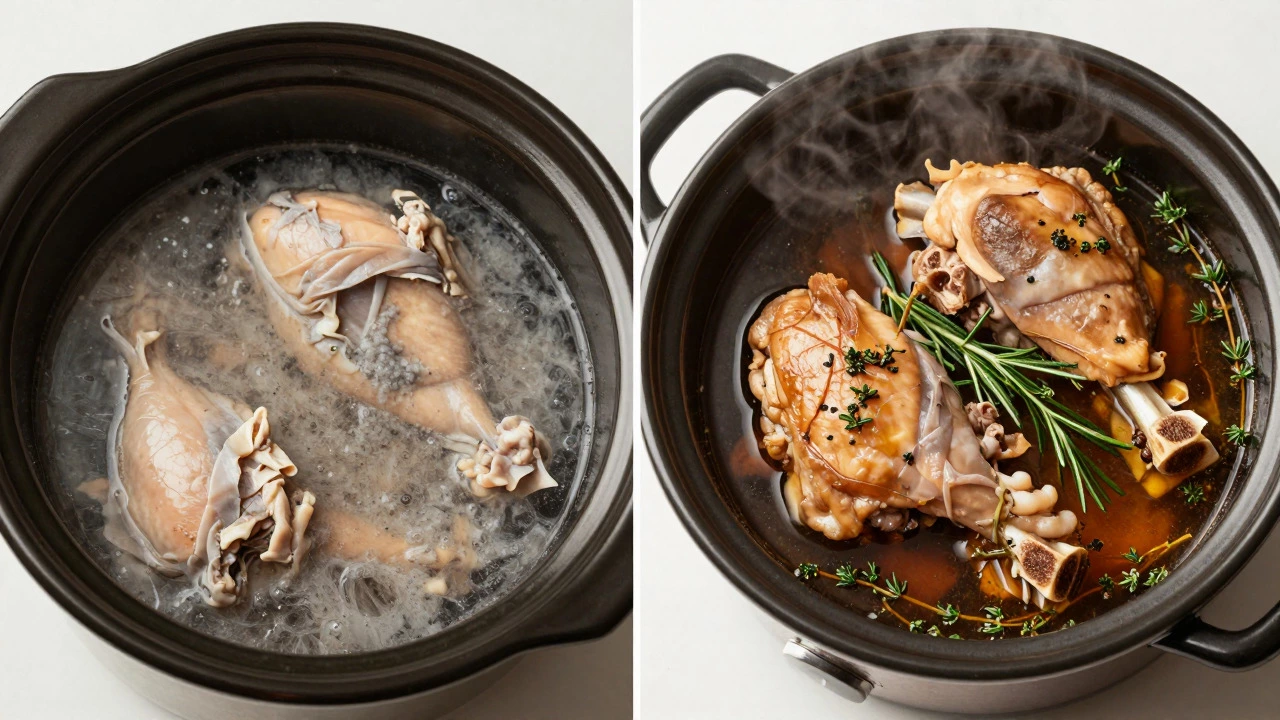
Bone Broth is a rich, savory stock made by simmering bones and vegetables. It is the superior choice for chicken because it reinforces the meat's natural flavor profile. Using chicken broth instead of water instantly makes the resulting sauce more robust. If you are making a curry or a stir-fry style dish, coconut milk or tomato sauce works wonders. These thicker liquids coat the chicken, adding richness and preventing the dryness that water promotes.Consider the recipe you are making. A lemon-garlic chicken needs white wine or citrus juice. A BBQ chicken needs ketchup-based sauce. The liquid should complement the seasoning, not just provide hydration. Always check your recipe first-if it calls for water, try swapping in broth unless the recipe relies on the water evaporating to concentrate other flavors later.
Placement Matters: Where Does the Chicken Go?
You might be adding the right amount of liquid, but if you bury the chicken under a mountain of potatoes and rice, it won’t cook evenly. Dense vegetables take longer to soften than chicken does. If you dump everything in at once, you risk overcooking the meat before the veggies are tender.
Place the chicken on top of the harder vegetables. Put onions, carrots, and potatoes on the bottom where the heat is most intense. Then lay the chicken breasts or thighs on top. This way, the chicken steams in its own space, and the juices drip down to flavor the vegetables below. If you are using a rack, use it! Elevating the chicken allows air to circulate underneath, promoting even cooking and preventing the bottom side from getting soggy.
Cut of Meat Changes Everything
Not all chicken is created equal, and the type of cut dictates your liquid strategy. Boneless, skinless chicken breasts are the trickiest. They are lean and prone to drying out within minutes of hitting high heat. For these, stick to the lower end of the liquid ratio (half a cup) and consider cooking on Low for 4-6 hours rather than High for 2-3 hours. The slower rise in temperature helps keep them tender.
Bone-in, skin-on thighs or drumsticks are forgiving. They have connective tissue and fat that break down during long cooking times, creating natural lubrication. You can get away with less added liquid here because the chicken renders its own fat. Whole chickens also fall into this category. A whole bird will produce a significant amount of liquid as it cooks. In this case, you might skip added liquid entirely, letting the internal juices create the braising environment.
| Chicken Cut | Recommended Liquid Amount | Cook Time (Low) | Risk Level |
|---|---|---|---|
| Boneless Skinless Breasts | ½ - 1 cup | 4-6 hours | High (Dries out easily) |
| Bone-In Thighs | ¼ - ½ cup | 6-8 hours | Low (Very forgiving) |
| Whole Chicken | 0 - ¼ cup | 6-8 hours | Low (Self-basting) |
| Frozen Breast Chunks | ½ cup | 5-7 hours | Medium (Releases own water) |
The Frozen Chicken Factor
Many people love slow cookers because they can throw in frozen chicken and walk away. But frozen meat changes the game. As ice melts, it turns into water. A pound of frozen chicken can release nearly a cup of water as it thaws. If you add a full cup of broth to frozen chicken, you’ll end up with a soup.
If you are cooking from frozen, reduce your added liquid by half. Start with just a splash of broth or sauce. Check the pot after 4 hours. If it looks dry, add a little more. If it’s swimming, you know you added too much initially. Also, ensure the chicken pieces are separated before freezing. A solid block of frozen chicken will cook unevenly, leaving cold spots in the middle while the outside turns to mush.
Safety First: Temperature Checks
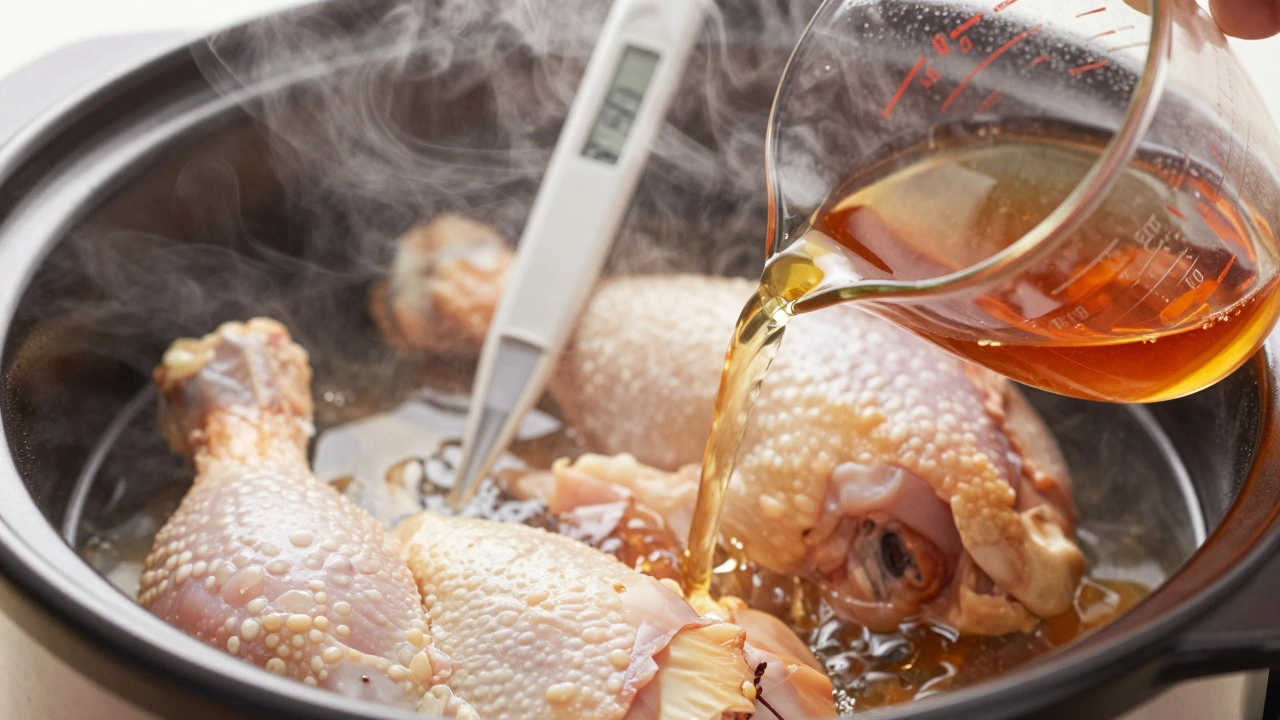
No matter how much liquid you use, safety is non-negotiable. Chicken must reach an internal temperature of 165°F (74°C) to kill harmful bacteria like Salmonella. Because slow cookers vary in wattage and insulation, "time" is a guideline, not a guarantee. Always use a meat thermometer.
Insert the thermometer into the thickest part of the meat, avoiding bone. If you’re cooking breasts, check multiple spots. If the center hits 165°F, it’s done. Pull it out immediately. Leaving cooked chicken in a hot slow cooker for hours past that point will eventually dry it out, regardless of how much liquid was there to begin with. The residual heat continues to cook the meat even after you turn the machine off, so taking it out promptly preserves texture.
Troubleshooting Common Issues
Did your chicken come out dry despite following the rules? Here are the usual suspects:
- Overcooked: Even with liquid, chicken breast dries out if left on High for too long. Switch to Low for lean cuts.
- Too Much Salt Early On: Salting the chicken heavily before cooking can draw out moisture prematurely. Season lightly before cooking and adjust salt at the end.
- Lid Off Too Often: Every time you lift the lid, you lose 15-20 minutes of heat. The steam escapes, and the temperature drops. Only open the lid when necessary.
- Wrong Pot Size: Cooking a small amount of chicken in a huge pot means there’s too much air space. The steam dissipates instead of circulating. Use a smaller pot for small batches.
On the flip side, if your chicken is mushy, you likely used too much liquid or cooked it for too long. Dark meat like thighs can handle 8+ hours, but breasts cannot. If you’re making shredded chicken, pull it apart once it reaches 165°F. Don’t let it sit in the heat until it falls apart on its own-that’s when the texture degrades.
Final Thoughts on Slow Cooker Chicken
Mastering the liquid ratio is the key to unlocking great slow cooker meals. Remember, you are building a steam chamber, not a boiling pot. Keep the chicken above the liquid line, use flavorful broths instead of plain water, and adjust based on the cut of meat. With these adjustments, your next slow cooker chicken dinner will be tender, juicy, and full of flavor, proving that less really is more when it comes to liquid.
Can I cook chicken in a slow cooker with no liquid at all?
Yes, especially if you are cooking a whole chicken or bone-in thighs. These cuts release enough natural juices and fats to create their own braising liquid. However, for lean cuts like boneless breasts, adding at least ½ cup of liquid is recommended to prevent burning and ensure even steaming.
Should I add water to the slow cooker before or after the chicken?
Always add the liquid first, followed by dense vegetables, and then place the chicken on top. This layering technique ensures the heat distributes evenly and prevents the bottom ingredients from sticking or burning.
Is it safe to cook frozen chicken in a slow cooker?
It is generally safe if you cook on High and ensure the chicken reaches 165°F quickly. However, many food safety experts recommend thawing chicken first to avoid the "danger zone" where bacteria multiply rapidly. If cooking from frozen, reduce added liquid significantly since the ice will melt into water.
Why is my slow cooker chicken dry?
Dry chicken is usually caused by overcooking, using high heat for lean cuts, or lifting the lid too frequently. Boneless breasts are particularly sensitive. Try cooking on Low for a shorter duration and check the temperature early to prevent overcooking.
Can I use wine instead of water for slow cooker chicken?
Absolutely. Wine adds acidity and depth of flavor that water lacks. White wine pairs well with lemon and herb profiles, while red wine works great with tomatoes and mushrooms. Just be aware that alcohol content may reduce slightly during long cooking, but the flavor remains potent.

Write a comment