Bone-In Chicken Roast Calculator
Your Roasting Plan
Estimated Total Time
--
Internal Temp Goal
165°F - 175°F
You pull a whole bone-in chicken out of the fridge, preheat the oven, and then you hit a wall. The recipe says 350°F. Your friend’s blog says 400°F. Which one actually makes the best dinner? It’s not just about picking a number on the dial. It’s about understanding what heat does to meat, fat, and moisture.
If you want juicy meat with zero effort, 350°F is your safe zone. If you want that shatteringly crisp skin and faster cooking time, 400°F wins. But there’s a catch. One method dries out the breast if you’re not careful; the other leaves the legs undercooked if you rush it. Let’s break down exactly when to use each temperature so you never serve rubbery chicken again.
The Science Behind the Heat
Before we pick a winner, let’s look at what happens inside the bird. Chicken is mostly water, protein, and fat. The goal of roasting is to cook the protein without squeezing out too much water, while rendering the fat under the skin to make it crispy.
At 350°F (175°C), the heat transfers slowly into the meat. This gentle approach allows the collagen in the connective tissues to break down gradually. You get tender meat, but the skin often stays pale and soft because the surface doesn’t get hot enough fast enough to dehydrate and brown effectively. Think of this as the "low and slow" method for poultry.
At 400°F (200°C), the energy hitting the chicken is significantly higher. This triggers the Maillard reaction-the chemical process that creates browning and complex flavors-much faster. The high heat renders subcutaneous fat quickly, allowing the skin to crisp up before the breast meat overcooks. However, the window between "perfectly cooked" and "dry" is narrower.
When to Choose 350°F
Stick with 350°F if you are baking large cuts or if you need to multitask. Because the temperature difference between the oven air and the target internal temperature of the chicken (165°F) is smaller, the cooking curve is flatter. This means you have more forgiveness. If you forget the chicken for ten minutes, it won’t instantly turn into jerky.
- Whole Chickens Over 4 Pounds: Larger birds need time for heat to penetrate to the center without burning the outside.
- Stuffed Birds: If you’re packing the cavity with bread or rice, lower temps ensure the stuffing heats through safely without drying out the meat.
- Busy Weeknights: If you’re stepping away to answer emails or help kids with homework, 350°F keeps things steady.
The trade-off here is texture. You will likely end up with softer skin. To fix this, many home cooks start at 350°F and blast the broiler for the last five minutes. It works, but it requires attention.
When to Choose 400°F
This is the sweet spot for most home ovens and standard-sized chickens (3 to 4 pounds). At 400°F, you can achieve restaurant-quality crispy skin without needing a professional convection oven. The higher heat evaporates surface moisture rapidly, which is the key to crispiness. Water boils at 212°F, but evaporation speeds up dramatically as the surface temp rises. By keeping the oven at 400°F, you push the skin past that boiling point quickly, leaving behind dry, crunchy goodness.
Plus, it saves time. A 4-pound chicken might take 90 minutes at 350°F, but closer to 70-75 minutes at 400°F. That’s an hour and a half of active cooking time versus nearly two hours. For families who eat early, this matters.
| Feature | 350°F (175°C) | 400°F (200°C) |
|---|---|---|
| Cooking Time (4 lb bird) | ~90-100 minutes | ~70-80 minutes |
| Skin Texture | Soft, potentially soggy | Crispy, golden brown |
| Juiciness Risk | Low (forgiving) | Moderate (requires timing) |
| Best For | Large birds, stuffed cavities | Standard birds, crispy skin lovers |
| Energy Usage | Longer runtime | Shorter runtime, higher peak |
The Hybrid Method: Best of Both Worlds
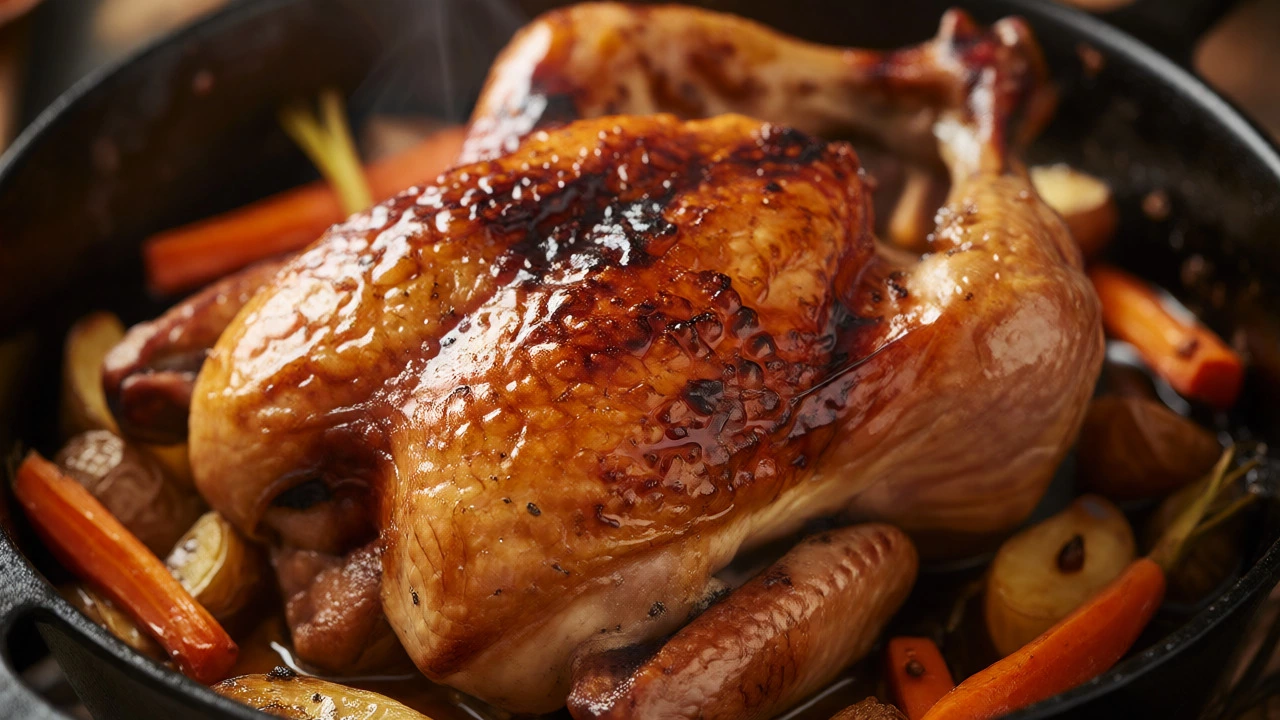
Why choose one when you can use both? Many top chefs swear by starting hot and finishing cool, or vice versa. Here is the strategy that consistently produces the juiciest meat and crispiest skin:
- Start at 425°F for 15 Minutes: Blast the chicken with high heat immediately after putting it in the oven. This sears the skin and locks in juices.
- Drop to 350°F for the Remainder: Once the skin has color, lower the temp to finish cooking the interior gently. This prevents the breast from drying out while the dark meat catches up.
- Rest for 10 Minutes: Never skip this. Cutting into hot chicken releases all those precious juices onto your cutting board instead of your plate.
This method takes slightly more management, but the results justify the extra step. You get the visual appeal of high-heat roasting with the tenderness of low-heat cooking.
Preparation Tips That Matter More Than Temperature
You can bake at the perfect temperature and still fail if your prep is off. Here is how to set yourself up for success regardless of the dial setting.
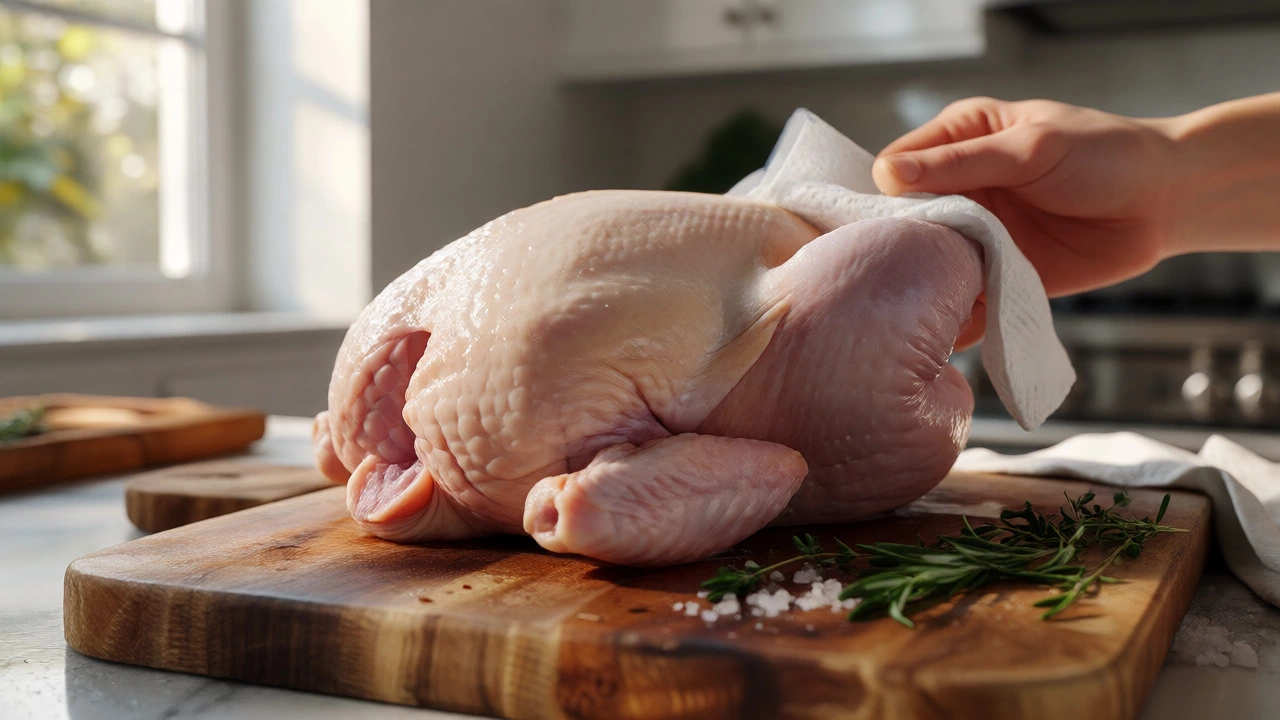
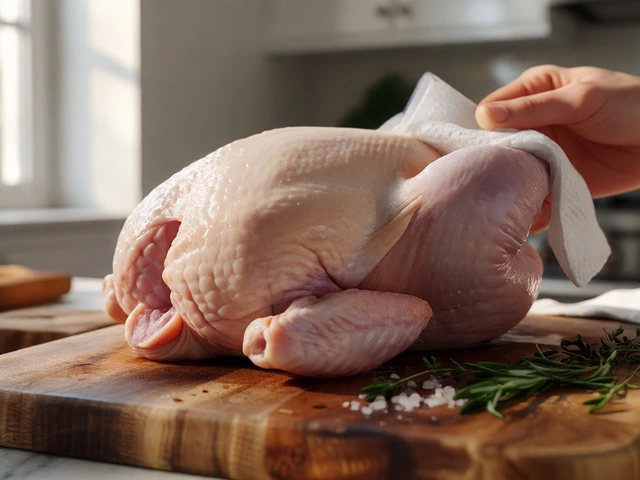
Dry the Skin Thoroughly: Moisture is the enemy of crispiness. Pat the chicken dry with paper towels inside and out. If you have time, leave it uncovered in the fridge for a few hours or overnight. This air-drying process removes surface moisture, helping the skin crisp up faster.
Use Room Temperature Meat: Pull the chicken out of the fridge 30-45 minutes before baking. Cold meat drops the oven temperature when it goes in, leading to uneven cooking. Starting closer to room temp ensures the breast and thighs cook at similar rates.
Season Under the Skin: Don’t just salt the outside. Gently loosen the skin over the breast and rub butter or oil mixed with herbs directly onto the meat. This protects the lean breast meat from drying out and adds flavor where it counts.
How to Know When It’s Done
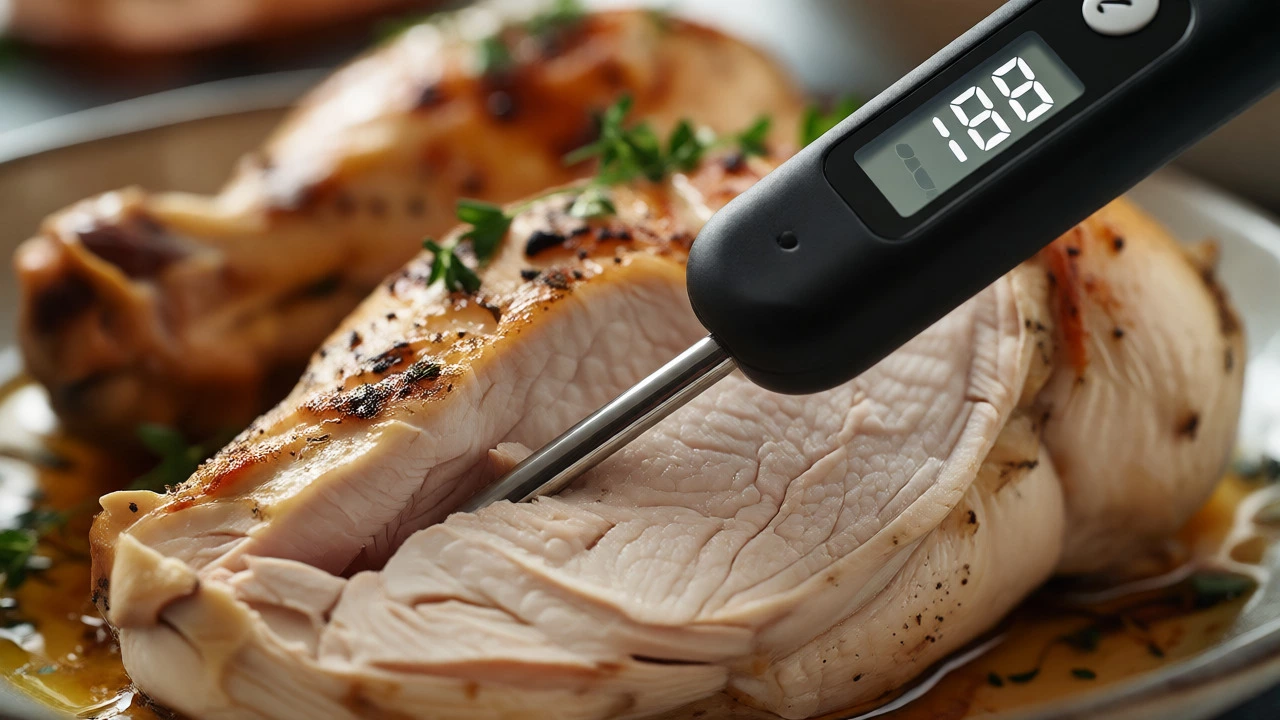
Forget timers. They lie. Use a digital instant-read thermometer. This is the single most important tool in your kitchen for roasting poultry.
- Breast Meat: Remove the chicken when the thickest part reads 160°F. Carryover cooking will raise it to the safe 165°F while it rests.
- Thighs and Legs: These cuts have more connective tissue and prefer higher temps. Aim for 175°F-180°F in the thigh joint for fall-off-the-bone tenderness.
If you pull the whole bird at 165°F, the thighs will be tough and chewy. If you wait for the thighs to hit 180°F, the breast will be dry. The solution? Cook until the breast hits 160°F, remove the breasts if necessary, and return the legs/thighs to the oven for another 10-15 minutes. Or, accept slightly less tender thighs for perfectly moist breasts.
Troubleshooting Common Issues
Problem: The skin is burning but the inside is raw.
Solution: You’re likely using 400°F+ on a very large bird. Tent the chicken loosely with aluminum foil once the skin turns deep gold. This reflects radiant heat and slows down browning while the interior continues to cook.
Problem: The chicken is dry despite using a thermometer.
Solution: Did you rest it? If you cut immediately, the muscle fibers squeeze out liquid. Also, check your oven calibration. Many home ovens run hot. An oven thermometer placed inside costs $10 and can save your dinner.
Problem: Uneven cooking.
Solution: Truss the legs together with kitchen twine. This holds the shape compactly, preventing the thin wing tips from burning while the thick drumsticks remain undercooked.
Is it better to bake chicken covered or uncovered?
For bone-in chicken, always bake uncovered. Covering traps steam, which makes the skin soggy rather than crispy. If the skin browns too quickly, tent it with foil halfway through, but do not cover the entire dish for the duration of cooking.
Can I bake chicken breasts at 400 degrees?
Yes, boneless skinless breasts benefit from high heat like 400°F or even 425°F. Because they lack bones and skin, they dry out easily. High heat cooks them fast (15-20 minutes), minimizing moisture loss. Just watch closely to prevent overcooking.
Does 350 or 400 affect food safety?
No, food safety depends entirely on internal temperature, not oven temperature. As long as the thickest part of the chicken reaches 165°F (74°C), it is safe to eat, whether you baked it at 300°F or 450°F. Higher temperatures simply reach that safety threshold faster.
How long does a 5-pound chicken take at 350 degrees?
A general rule of thumb is 20 minutes per pound plus 15-20 minutes extra. For a 5-pound bird at 350°F, expect roughly 2 hours to 2 hours and 15 minutes. Always verify doneness with a thermometer rather than relying solely on time calculations.
Should I add water to the pan when baking chicken?
Avoid adding water if you want crispy skin. Water creates steam, which hinders browning. Instead, use olive oil, melted butter, or broth drippings in the pan. These fats conduct heat well and contribute to flavor without making the environment humid.




Write a comment